- Call: +254 711 547299
- info@majestickenya.com

Plan your safari
Share your dates and what you want to see. Our consultants will send a route, lodges and price.
Prefer to talk? WhatsApp or call +254 711 547299
Fly-In Luxury Safaris in Kenya
Scheduled domestic flights and private charters connect the Masai Mara, Amboseli, Samburu and the coast. We coordinate every flight, airstrip transfer and lodge, so you spend your days on game drives instead of on the road.
- Domestic flights booked and timed for you
- Private vehicle waiting at each airstrip
- Reserve with a 30% deposit
Your own vehicle and guide
20+ years in the field
Plus city stays if you arrive early
Cianda House, Koinange Street
Our top luxury fly-in safaris
Prices are per person in US dollars and include the domestic flights on each itinerary.
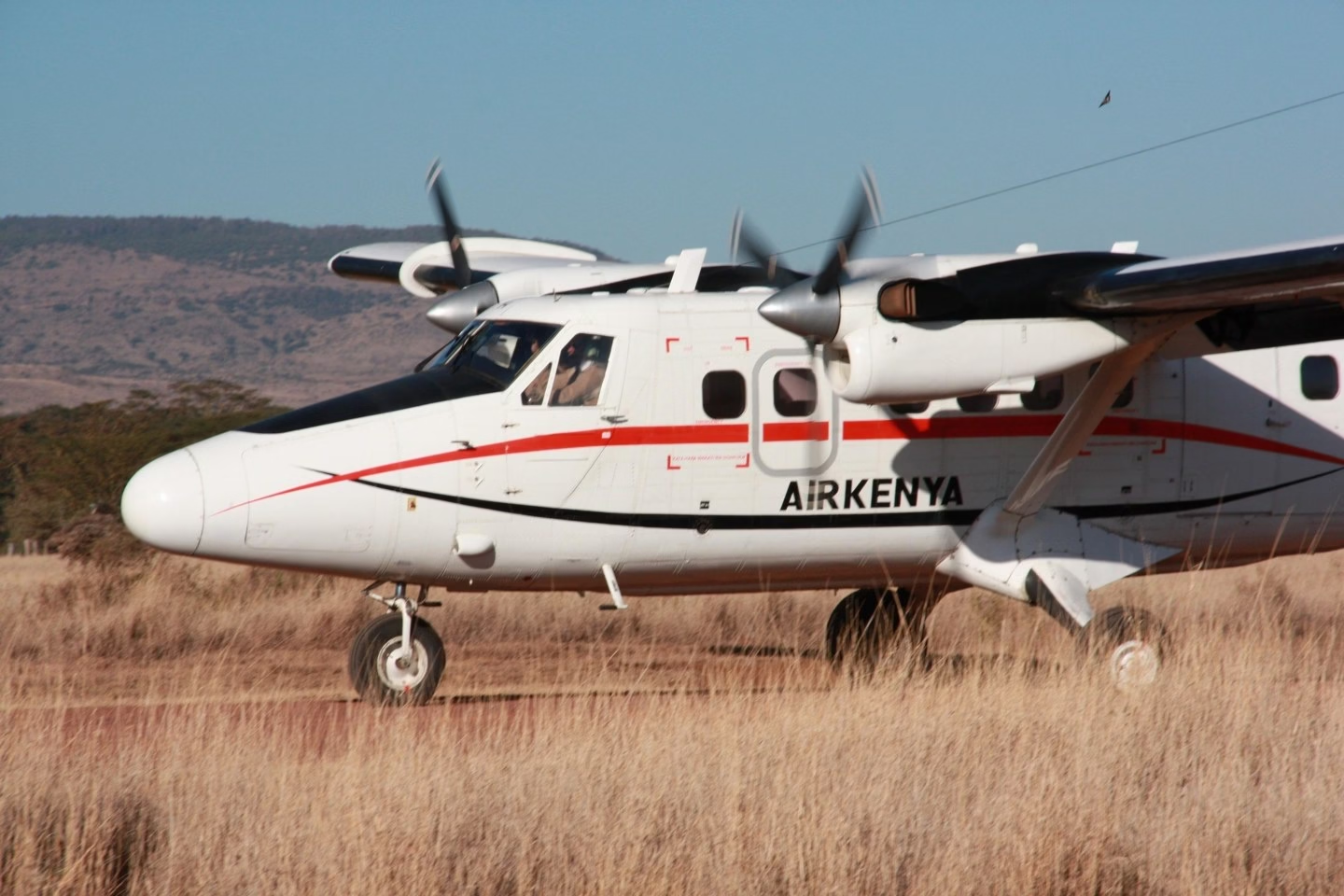
3-Day Masai Mara Flying Safari
Fly in from Nairobi for game drives, Big Five encounters and a luxury lodge. View tour
From
$1,350

4-Day Fly-In Masai Mara Luxury Safari
Three full days of Mara game drives from Mara Serena Lodge or a camp you prefer. View tour
From
$2,020
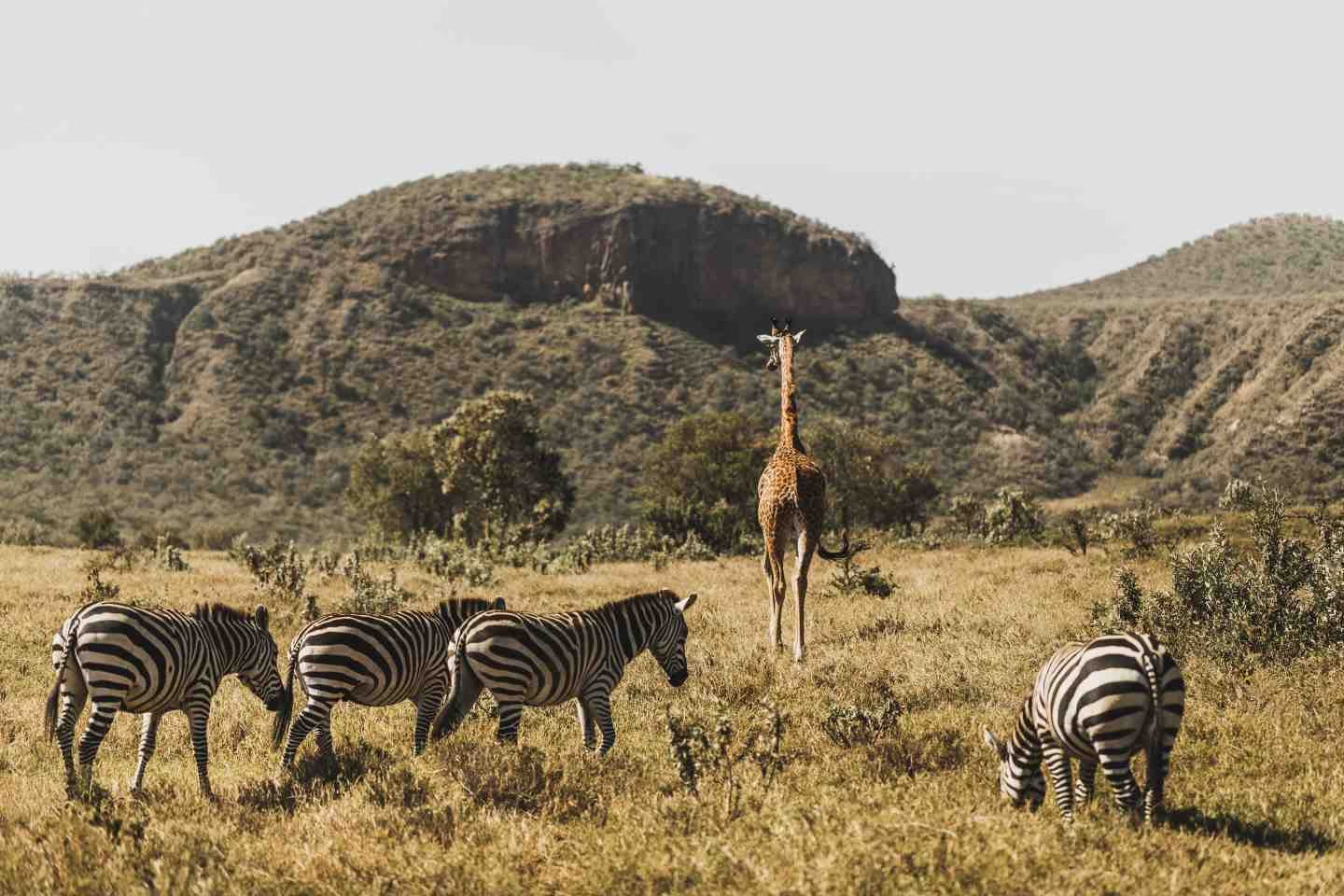
7-Day Best of Kenya Luxury Flying Safari
Samburu, Ol Pejeta Conservancy and the Masai Mara with scenic flights. View tour
From
$4,000
7-Day Luxury Kenya Flying Safari
Two nights in Amboseli, then four nights of Big Five drives at Mara Serena. View tour
From
$4,400

8-Day Safari and Beach Combo
Wildlife in the Mara, then relaxing days on Kenya’s coast. View tour
From
$3,900
9-Day Fly-In Luxury Safari
Amboseli, four nights in the Masai Mara and Samburu, all by light aircraft. View tour
From
$7,400
Prices are per person in US dollars and exclude international flights. The domestic flights on each itinerary are included.

A Kenyan team that plans and runs your trip
Kenya-born guides
Our guides grew up here and have years in the field. They read animal behaviour, so you are in place before the action starts.
Your own vehicle
A private 4×4 with a pop-up roof for your group only. You decide how long to stay at every sighting.
One clear price
Park fees, accommodation, meals and transfers are in your quote. If something is extra, we tell you before you book.
Fully private and all-inclusive
We handle all the logistics between parks, so you aren’t managing anything on the ground.
Included
- Lodges and camps matched to your budget
- All meals on safari
- Park entry fees
- Game drives with your own guide and driver
- A private 4x4 for the whole trip
- Airport transfers in Nairobi
- Transfers between parks
Not included
- Domestic flights (included on fly-in safaris)
- International flights
- Travel insurance (we can help arrange it)
- Tips and spa treatments
From our travellers
“The trip completely exceeded our expectations, even despite it not being ‘peak season’ we were able to tick off Africa’s Big 5 on the very first game drive. This was in no small part down to our guide, Bonnie…”
Couple · 6-day luxury safari
“Stanley Gichuki crafted the journey of dreams… Samburu was our favorite in terms of landscape. We stood in awe in Samburu as reticulated giraffes swept across the horizon…”
Samburu and the Mara
“Our guide Samuel was fantastic – incredible wildlife knowledge and spotted animals from miles away. We saw the Big Five, including a pride of lions with cubs in the Maasai Mara.”
7-day safari
How to book
- 1Contact our consultantsThrough the form on this page, WhatsApp or email.
- 2Agree your route and lodgesWe add any domestic flights once the route is set.
- 3Reserve with a 30% depositThe balance is due 60 days before travel.
Best time to go
How our fly-in safaris work
Our fly-in Kenya safaris connect the Masai Mara, Amboseli, Samburu, and the Indian Ocean coast by scheduled domestic flights and private charters. Working with trusted local aviation partners, we coordinate every flight, airstrip transfer, and ground connection so you land directly at each reserve and spend your time doing what you came for. Every itinerary is private, fully inclusive, and designed around your dates and the experience you want.
Fly-in safaris require more logistical coordination than a road trip, so we keep the booking side as straightforward as possible. Put down 30% to confirm your domestic flights, your private vehicle, and your lodges at each destination. The balance is due 60 days before departure.
As a TRA-licensed Kenya tour operator, we work to the standards the government sets for the industry. Before your balance falls due, you receive a written day-by-day itinerary and written accommodation confirmation. Every payment comes with a full receipt.
Flying turns a short trip into a full multi-park safari. The road from Nairobi to the Masai Mara takes five to six hours, and light aircraft cover the same distance in about 45 minutes. Those saved hours go into game drives and camp time rather than a long transfer.
The packages on this page put you in Kenya’s best camps with the shortest transfers between them. We fly you on scheduled light aircraft for the main routes, and for groups who want full control over their timing we arrange private charters instead.
Each route can take in several parks. The Masai Mara holds the highest concentration of big cats in Africa, and from July to October the wildebeest cross the Mara River here. Amboseli sits beneath Kilimanjaro and is known for its large, relaxed elephant herds. Further north, in the dry country around Samburu, you find species that live nowhere else in Kenya, including the reticulated giraffe and Grevy’s zebra. Many clients add three or four nights at Diani Beach to end the trip on the coast.
We handle the domestic flights, the airstrip transfers, and every luggage move in between. Light aircraft limit you to 15kg in a soft bag, which we explain at the time you book. Flight costs are already included in every package price on this page.
One practical note on entry. Kenya switched from a visa to an eTA in January 2024. It costs USD 30 and takes roughly three working days to come through. We guide you through the application before you travel.
Send us your dates and group size, and we will shape one of the routes below around you.
Not sure how many days you need?Tell us what you want to see and we’ll suggest a length and route.
Last updated: 13 October 2026
Frequently asked questions
How much do domestic flights cost on a fly-in safari?
Scheduled light aircraft on routes like Nairobi to the Masai Mara run roughly USD 150 to USD 300 per person each way, depending on the airline, the season, and how early you book. Private charters cost more but give you full control over timing and routing, which often makes sense for groups of four or more. Either way, the flight cost is already built into every package price on this page, so nothing here is charged on top.
How many days do I need for a fly-in safari?
Most of our routes run three to twelve nights and take in two to four parks. Flying keeps the transfers short, so even a seven-night trip can comfortably cover the Masai Mara, Amboseli, and a few nights at the coast. If you have ten days or fewer and want more than one park, flying is the way to make every day count.
What is the luggage limit on the small aircraft?
Light aircraft limit you to 15kg per person in a soft-sided bag. Hard suitcases are not accepted on these routes. Anything over the limit is stored securely at our Nairobi office and returned to you on your way out, so you travel light in the bush without leaving bags behind. We explain all of this at the time you book.
When is the best time to go on a fly-in safari?
Kenya is good all year. June through October is the classic window for the Great Migration and dry-season game viewing, when animals gather at water and sightings are clearest. December and January bring green country and newborn animals. March and April are quieter, with strong wildlife viewing, fewer vehicles, and better rates on camps.
Do I need a visa to visit Kenya?
Kenya switched from a visa to an eTA in January 2024. It costs USD 30 and takes roughly three working days to come through. You apply online before you travel, and we guide you through the application as part of your booking.
Can you build a custom fly-in itinerary?
Yes. Every route on this page is a starting point rather than a fixed product. We adjust the camps, the parks, and the pace around your dates, your group size, and how you like to travel. Send us what you have in mind and we will shape a route around it, or build a new one from scratch.
Let us help plan your safari
Tell us your dates and the parks you’re interested in. Our consultants will put together a private itinerary and an all-inclusive quote.