
Your eTA and entry documents are sorted, your vaccinations and travel insurance are in place. Now the fun part, planning the trip itself. The journey from Australia to Kenya is a long one, and there are a few things you should know before you arrive, including the currency, the electrical system, and a few safety tips. Nothing is difficult, but a little preparation can mean the difference between a smooth and enjoyable trip and a frustrating one.
This is the how-to, the flights, the money, the safety, the packing, the cultural etiquette, and all the little details that guidebooks often overlook. If you are looking for more safari inspiration and safari planning, check out some of our Kenya safaris specifically prepared for Australians.
No direct flights from Australia to Kenya. All routing includes at least one stopover and the majority of routing includes a stopover in one of the major Middle East or African hubs. Australian tourists can choose from the following most popular options:
Emirates (via Dubai), Qatar Airways (via Doha) and Etihad (via Abu Dhabi) all provide a timely route to Nairobi via the Middle East. These are usually the most comfortable, and modern aircraft and good layover facilities. The total travel time is usually 18 to 22 hours, depending on the city of departure in Australia and the connection time.
Ethiopian Airlines: Ethiopian Airlines has competitive fares from Australian cities to Nairobi through Addis Ababa. This is usually the cheapest route, but remember Ethiopia is a yellow fever endemic country, so if your layover in Addis Ababa runs longer than 12 hours you will need your yellow fever vaccination certificate to present to Kenyan immigration. Shorter layovers generally don’t trigger the requirement, but check your specific routing rather than assume. Refer to our health and vaccinations guide for complete information.
Some travellers choose to take a flight to Singapore or Bangkok and then connect to Nairobi with Kenya Airways, which offers direct flights between Nairobi and both destinations. This can be effective if you need to take a break during the trip.
Most tourists arrive in Kenya via Jomo Kenyatta International Airport (NBO) in Nairobi, the country’s primary international airport. Moi International Airport in Mombasa also serves some international flights and is the preferred airport if you are going directly to the coast.
Bookings made well in advance are likely to offer the best rates, especially if you are travelling during the peak safari season from July to October (Great Migration in the Maasai Mara) or during Australian school holidays. Flight comparison sites are great, but also look at the airlines themselves as Ethiopian Airlines and Kenya Airways have promotions that don’t show up on aggregator sites.
Kenya is on East Africa Time (EAT), which is UTC+3 all year round (no daylight saving in Kenya). The time difference varies from approximately 5 hours behind (Perth, which also does not observe daylight saving) to 8 hours behind (Sydney and Melbourne when daylight saving is in effect in Australia). Jet lag from Australia to Kenya is not too bad for most travellers, as it is not as bad as flying to Europe or the Americas, especially if you are flying through a Middle Eastern stopover to help break up the journey.
The local currency is Kenyan Shilling (KES). One Australian dollar is worth about 85 to 95 Kenyan Shillings (KES) as a general guideline, but this rate can vary. US dollars are also accepted at safari lodges, hotels and tour operators, and some prices (especially for tourism services) are quoted in USD.
Here are some tips on how to handle money in Kenya:
Credit and debit cards: Visa and Mastercard are accepted in larger restaurants, supermarkets, hotels and lodges in Nairobi and Mombasa. American Express is not accepted as much. Always have a spare card in case one is rejected.
ATMs: Found in Nairobi, Mombasa and other towns. Most will take international Visa and Mastercard debit cards. Make larger withdrawals to reduce transaction fees and use ATMs located in banks or shopping centres for security.
Cash: This is still very important in Kenya, particularly for markets, street food, tips, small shops and rural areas. Bring a combination of Kenyan Shillings for everyday use and a little US dollars for emergencies.
M-Pesa: Kenya’s mobile money system is ubiquitous. Almost all Kenyans use M-Pesa for their taxi fare, supermarket shopping, and more. As a tourist, you need a local SIM card to register an M-Pesa account, which can be a bit of a process, but can be done at any Safaricom shop. Not necessary for short tourist visits, but useful to know about.
Bank notification: Make sure you let your bank know that you will be using your card in Kenya before you leave Australia. One of the most frequent causes of cards being blocked for suspected fraud when traveling abroad is not doing this.
Tipping is the norm in Kenya. The general rule is about 10% in restaurants, KES 1,500-3,000 per day for safari guides and drivers and KES 500-1,000 for porters and housekeeping. Your safari provider will typically give you a clear indication of what to tip.
In the primary tourist areas, Kenya is a relatively safe country for visitors, and millions of tourists visit the country annually without any problems. However, the Australian Government’s Smartraveller advisory for Kenya advises exercising a high degree of caution, warning of the risk of civil unrest, crime and terrorism.
Let’s break down what that translates to for you:
Terrorism: Kenya continues to face a threat of terrorist attacks, mainly from al-Shabaab. Attacks may happen anywhere, but are most likely to happen in border regions close to Somalia (Garissa, Wajir and Mandera counties) and in certain coastal regions. Stay out of these border areas altogether. In Nairobi and other urban areas, take precautions in crowded areas like shopping centres, hotels and transport hubs.
Crime: Petty crime including bag snatching, pickpocketing and phone theft is prevalent in Nairobi, especially at night and in crowded areas. There is also violent crime such as armed carjacking and mugging. Be sensible: don’t walk alone at night, don’t leave valuables in view, don’t wear flashy jewellery, don’t leave car windows down or doors unlocked.
Transport safety: Take registered taxis or ride-hailing apps like Uber and Bolt, which are available in Nairobi and Mombasa and are safer than picking up random taxis. On safari, your tour operator will arrange for all transport.
Particular areas to avoid: Kenya-Somalia border counties, Eastleigh and Kibera neighbourhoods in Nairobi and parts of the northern counties bordering Ethiopia.
Before you leave Australia, register with Smartraveller so the government can reach you in case of an emergency. Have the contact details for the Australian High Commission in Nairobi (phone +254 20 427 7100) and the 24-hour Consular Emergency Centre (+61 2 6261 3305) on your phone.
The weather in Kenya is very different depending on the location and time of year. Nairobi is located at approximately 1800 metres above sea level and is sometimes quite cold, especially in the mornings and evenings, with night temperatures of 10 – 15°C not uncommon. The coastal area (Mombasa, Diani, Lamu) is hot and humid all year round. Safari destinations are warm during the day, but the mornings are indeed cold, particularly during the dry season (June to October) when early morning game drives can be cold.
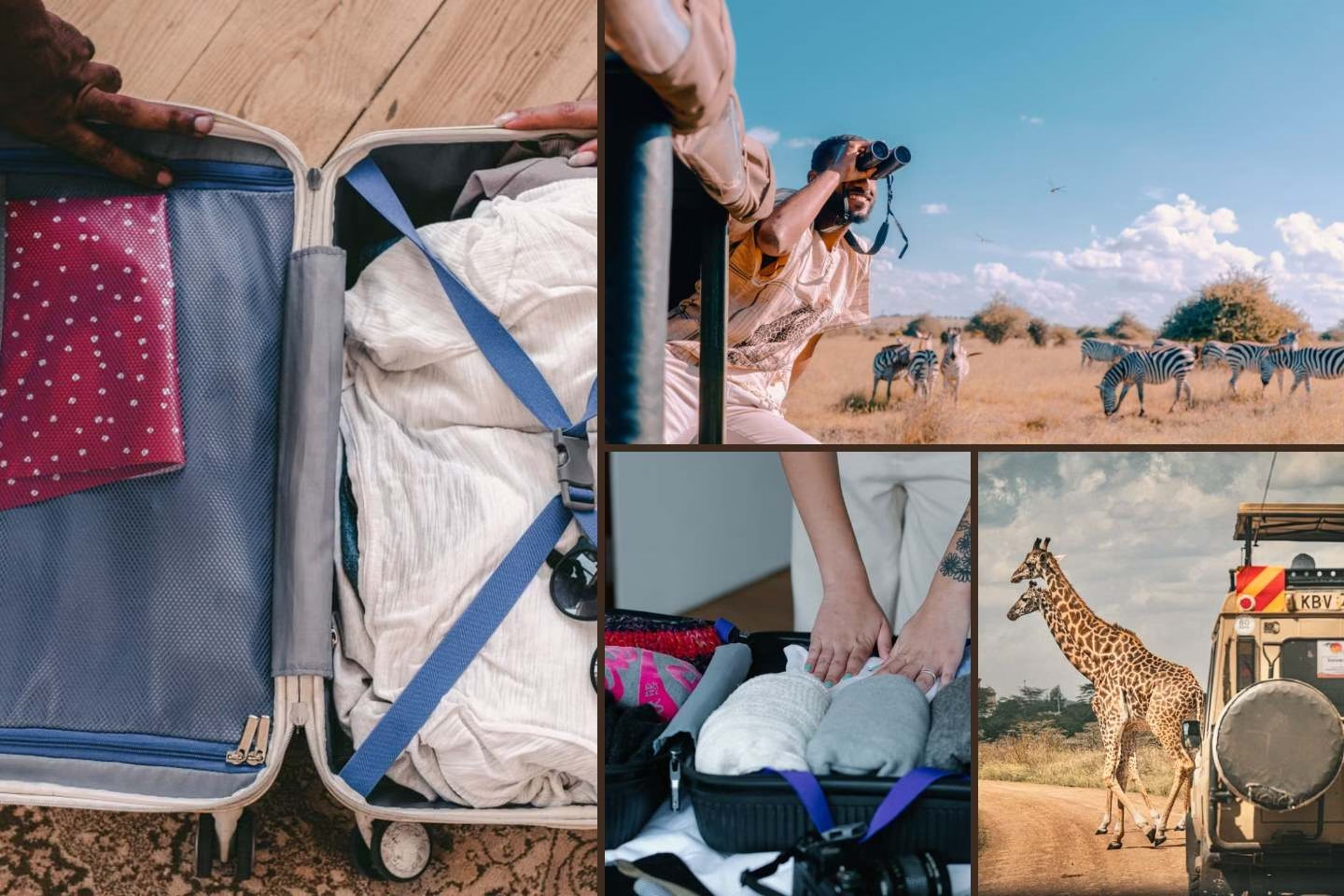
Here is a handy packing list:
Clothing: Light, breathable, neutral or earth colors (khaki, olive, beige, brown) for safari. Bright white (glare and dirt) and dark blue or black (attract tsetse flies) are to be avoided. Bring a warm fleece or jacket for early morning game drives and highlands.
Footwear: Comfortable, well-fitting closed toe walking shoes for safari and bush walks. Sandals or flip flops for the coast and around camp. Wear in new shoes before you travel.
Sun protection: wide brimmed hat, good quality sunglasses with UV protection, and sunscreen (SPF 30+ is better, the closer to the equator). Reapply often, particularly when driving in open vehicles during game drives.
Insect protection: DEET (30%+) or Picaridin repellent. Long sleeves and pants for evening. For extra protection, think about wearing clothes that have been treated with permethrin.
Electronics: A universal power adapter is necessary, as Kenya has British-style Type G three-pin plugs (like those used in the UK, Singapore and Hong Kong). Take a power bank to charge while you are out, as some safari camps do not have a lot of electricity.
Camera and binoculars: A camera equipped with a good zoom lens (200mm minimum, 400mm ideal) will make a difference in your wildlife photography. Binoculars are a must-have for birding and for viewing animals from afar.
Medications: Bring all prescription medications in their original container with a letter from the doctor. Bring antimalarial tablets, personal medicines and a simple first aid kit containing painkillers, rehydration salts, antiseptic and plasters.
Miscellaneous: A head torch or small flashlight (useful in safari camps at night), a reusable water bottle, zip-lock bags to keep electronics safe from dust, photocopies of your passport and important documents kept separately from the originals.
The Kenyan people are friendly and a little knowledge of the culture will make your experience so much better. The national greeting is “Jambo” (hello in Swahili) and it is always appreciated when used with a smile. Greetings are important in Kenyan culture, take a moment to say hello and ask how someone is before launching into a request or transaction.
Never take photos of people without their consent, especially in Maasai and other traditional communities. Photography is generally accepted, but a small tip or agreed fee is generally expected in exchange. It’s a cultural norm, not a tourist trap, respect it.
When travelling to the more Muslim coastal regions like Lamu, Malindi and parts of Mombasa, dress modestly. Cover shoulders and knees and take off shoes when entering mosques. When visiting churches or rural communities, modest dress is also appreciated.
Please note that same sex relationships are illegal in Kenya. Same sex couples should avoid public displays of affection. The legal framework is in place, although attitudes in cosmopolitan Nairobi tend to be more tolerant.
Mobile network coverage is excellent in urban areas and surprisingly good in many safari destinations in Kenya. Safaricom is the leading provider. Local SIM cards are readily available and cheap, and can be bought at the airport or at any Safaricom shop with your passport. Data packages are extremely cheap, especially when compared to the roaming rates in Australia. Most hotels and lodges have Wi-Fi, although it may be slow in remote safari camps.
Essential Contacts for Australian Travellers • Australian High Commission, Nairobi: +254 20 427 7100 • 24-Hour Consular Emergency Centre: +61 2 6261 3305 • Kenya Police: 999 or 112 • Smartraveller: smartraveller.gov.au/destinations/africa/kenya • eTA portal: etakenya.go.ke |
.

Tracey is a Senior Safari Consultant at Majestic Kenya Safaris. She holds a degree in Travel and Tourism Management from the University of Nairobi and has spent more than a decade planning safaris, including several years at Ardan Safaris, where she worked in safari offices and at ground level in bush camps. Her insights have appeared in several travel magazines and she has authored two guides on sustainable tourism practices. She writes on safari costs, trip planning, conservation, sustainable tourism, and wildlife. She is also an avid safari-goer, Masai Mara being her favorite safari destination.