By Tracey PelhamPublished 4 September 20248 min read
Nairobi National Park is a true anomaly, a wildlife park right in the middle of Kenya’s capital. Giraffes graze with skyscrapers in the distance, and lions roar within earshot of the city’s busy streets. It’s the only one of its kind on the edge of a capital city in the world and one of the more unusual safaris from Nairobi you can put together.
Nairobi National Park is Kenya’s first national park, which was established in 1946. It covers 117 square kilometres (45 square miles) of open grass plains, acacia thickets and riverine forest. The northern edge of the park is only 7 km from Nairobi’s city centre, which is a stark contrast between the wild Africa and the modern city.
This close proximity to the city makes Nairobi National Park not only a conservation area, but a working case study in the balance between human development and wildlife preservation. It is a wildlife corridor and dispersal area that supports the movement of wildlife and helps preserve the genetic diversity of species that are otherwise isolated by urban sprawl.
The terrain of the park is influenced by the Athi-Kapiti plains and the Mbagathi River which runs along the southern boundary of the park. Although it is sometimes a mere trickle during the dry season, this river is a lifeline for the many different inhabitants of the park. The different topography results in a mosaic of habitats, each with its own flora and fauna.
The setting of Nairobi National Park is one of the most impressive. On sunny days, visitors can enjoy seeing wild animals roam freely with Nairobi’s skyline rising behind them. It’s a visual reminder of the conflict between maintaining natural areas and allowing cities to expand.
Nairobi National Park is a relatively small park in a city, but it has an amazing variety of wildlife. The park has more than 100 mammal species and over 400 bird species, and is a microcosm of East African wildlife.
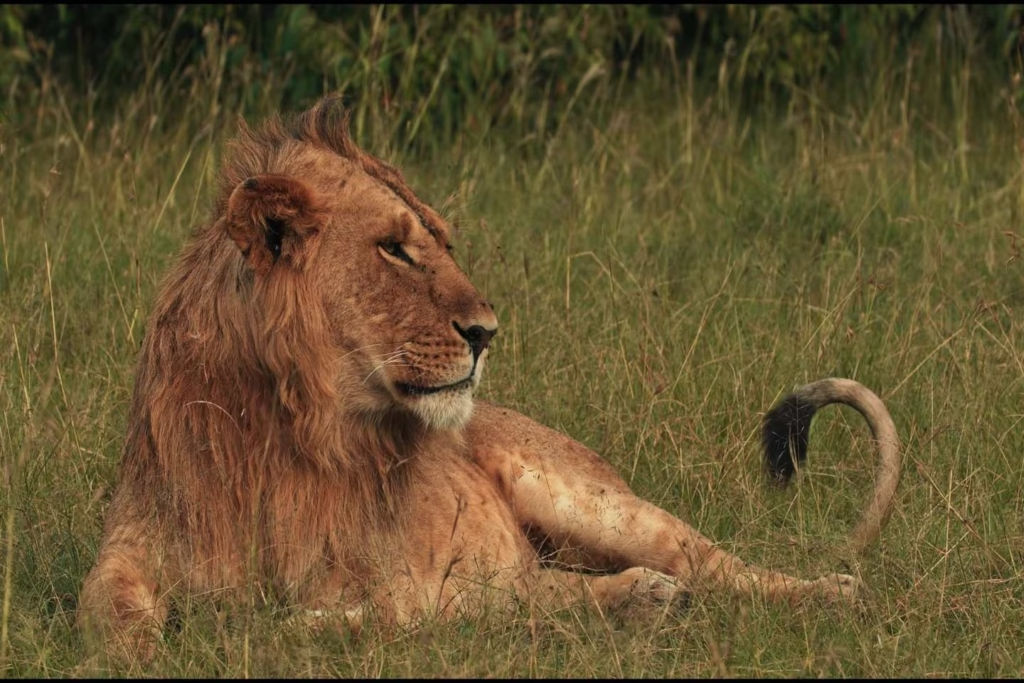
The park is home to some of the most famous big cats. This urban wilderness is home to lions, leopards and cheetahs. Although these elusive predators are not always seen, patient visitors are often rewarded with thrilling sightings. The sight of a pride of lions lying in the grass, seemingly unaware of the city life just outside the park’s boundaries, is a sight that defies the notion of where “wild” stops and “urban” starts.
The park also boasts a healthy population of black rhinos. These animals are critically endangered and are safe here, protected from poachers by 24-hour security. The rhino conservation programme in Nairobi National Park has turned it into an important breeding ground for the species and has contributed significantly in the fight to save the species from extinction.
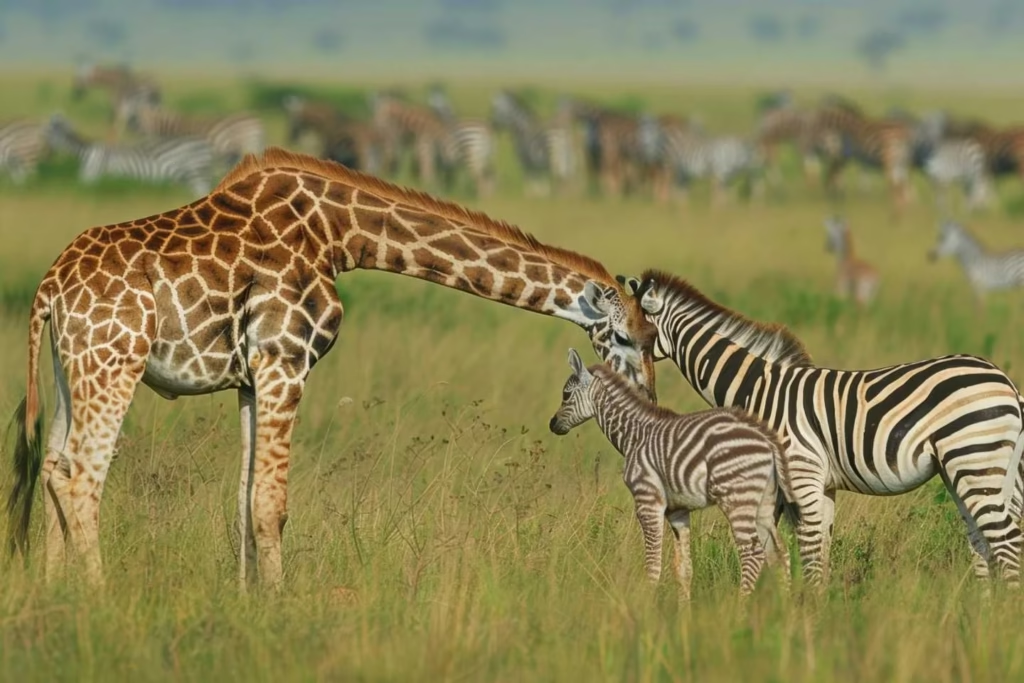
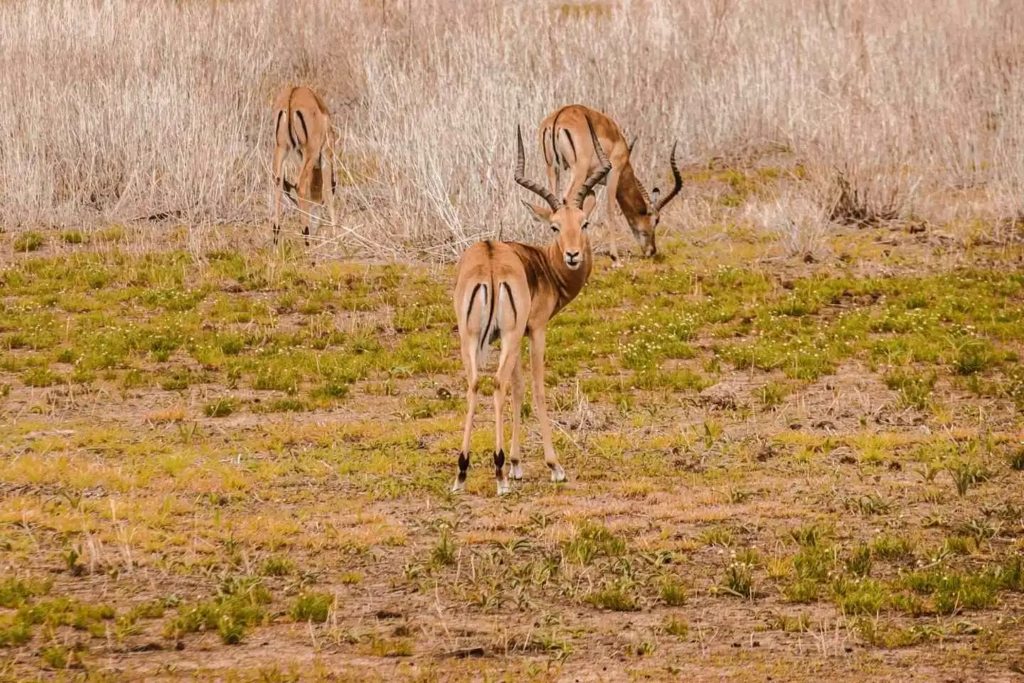
Other large mammals that are frequently seen in the park are buffaloes, giraffes, zebras, elands and hartebeest. The park’s dams and the Mbagathi River are home to hippos and crocodiles. The diversity of antelope species is especially remarkable, with Thomson’s and Grant’s gazelles, impalas, and waterbucks being among the many species that can be seen.
Nairobi National Park is a bird lover’s delight. The park’s diverse habitats are home to a remarkable diversity of birds, ranging from tall ostriches to small sunbirds. Significant birds include the secretary bird, crowned cranes, yellow-necked spurfowl and several birds of prey including eagles, hawks and vultures. The park is situated on the migratory routes and therefore many seasonal visitors are also present, and no two visits are exactly alike. The timing is also important, with different seasons offering different safari experiences in Kenya, especially when the dry season wildebeest and zebra migrate into the park.
The plant life in the park is just as varied, with several hundred species of indigenous plants recorded. They include the tall yellow fever trees of the riverine forests and the flat-topped acacias of the savanna. This plant diversity benefits the animals that inhabit the park and helps maintain the overall health of the habitat.
Keeping a wildlife sanctuary at the edge of a booming city is no easy task. Urban development, habitat fragmentation and human-wildlife conflict are pressures on Nairobi National Park. The southern migration route, which used to be open for wildlife to move between the park and the plains of Athi-Kapiti, has been progressively restricted by human habitation and fencing.
Another threat is climate change. Altered rainfall patterns impact water and vegetation, which impacts wildlife populations. During droughts, animals may be driven to look for food and water outside the park, resulting in increased interactions with surrounding communities.
Yet there have been some conservation successes in Nairobi National Park. The black rhino breeding program stands out, with the park playing a role in boosting rhino numbers not just within its own boundaries, but across Kenya. The park has also embraced new conservation techniques, such as satellite collars that monitor animal movements and smart fencing that helps minimize human-wildlife conflict.
The education and community engagement are integral to the conservation work in and around the park. Groups like Friends of Nairobi National Park, a non-profit society supporting the park since 1995, run outreach programs that aim to foster a sense of ownership and pride among the local communities, highlighting the economic and ecological value of conserving this natural heritage. School groups regularly visit the park, helping to build a new generation of conservation-minded Kenyans.
The park is also a research center. Its close location to Nairobi makes it an ideal location for long-term ecological studies, which can help to understand the dynamics of urban wildlife, the health of the habitat, and the impact of climate change. This research contributes to conservation efforts outside the park.
A safari in Nairobi National Park is a safari like no other. Being able to experience the natural world and observe wildlife so close to a major city is unusual. For first time safari-goers or those who have been to Africa before, and for those who are creating luxury safari packages or a quick getaway, the park offers more than its size indicates.
The most popular method of exploring the park is game drives. The best time to view predators is early morning as lions and leopards are most active during the cooler hours of the day. Throughout the day herds of grazers become more apparent, zebras, giraffes and different types of antelopes are scattered across the terrain. The park’s well-maintained road network lets visitors cover a good amount of ground, maximizing wildlife viewing opportunities.
Walking safaris are offered in some parts of the park for those who want to experience it more. These walks are accompanied by armed rangers and provide the opportunity to experience the sights, sounds and smells of the African bush up close. It’s an opportunity to see the finer things of the habitat, insects, plants, animal tracks and droppings, that are not easily visible from a car.
Another popular activity is birdwatching, and the park is home to a wide variety of bird species due to its diverse habitats. The dawn song of birds is memorable in itself and if you are patient you may be rewarded with the sight of colourful kingfishers, martial eagles or other raptors working the plains.
The more practical part of Nairobi National Park is that it is accessible. Nairobi National Park is one of the few wildlife reserves in Kenya that can be visited without having to travel long distances or take a flight. This is a truly handy introduction to African wildlife for those who are pressed for time or are new to safari.
There are also some interesting features within the park. The Ivory Burning Site Monument is a monument that commemorates the location where Kenyan President Daniel arap Moi burned 12 tons of ivory in 1989 as a symbolic gesture against the illegal trade in ivory. It is now a reminder of the continuing battle against poaching and the need for wildlife conservation.
The Nairobi Safari Walk, which is at the main entrance to the park, provides a more organised safari. This raised wooden boardwalk enables visitors to view animals in naturalistic enclosures, and offers good opportunities for photography and close up views of some of Kenya’s rarer species.
For those interested in the park’s conservation efforts, a visit to the Sheldrick Wildlife Trust‘s elephant nursery is worth the extra stop. It is located in the park, close to the main entrance, and is involved in the rescue and rehabilitation of orphaned elephants and rhinos with the ultimate aim of releasing them back into the wild. During the brief visiting hours, visitors can observe the young elephants playing and bathing, and learn about the challenges they face in the wild.
The future of Nairobi National Park is precariously balanced as Nairobi continues to grow. Urban encroachment is an emerging threat, with infrastructure development such as the Standard Gauge Railway (SGR) impacting on wildlife corridors. But this wild area in an urban area provides a working model for conservation efforts elsewhere.
The park shows that at least coexistence between human development and nature conservation is possible. It calls for a rethinking of urban planning and wildlife management, and indicates that urban and wildlife can coexist with proper planning.
Work is being done to establish and extend wildlife corridors, especially to the south of the park. These efforts are designed to ensure that the animals of the park are able to move freely and naturally, and that their genetic diversity is preserved.
The use of technology in the park is increasing. Drones are used to aid anti-poaching efforts and data tools are used to monitor wildlife trends over time. The Kenya Wildlife Service issues up-to-date entry requirements and park updates for visitors who wish to plan their own visit.
The long-term survival of the park is dependent on community involvement. Economic opportunities for local communities, including eco-tourism and jobs in the park, contribute to support for conservation. Education programmes are still contributing to instilling a conservation ethic among the next generation of Kenyans.
Nairobi National Park is more than a tourist attraction or a conservation area. It is a real-life illustration of what can happen when cities and wildlife meet. Standing in the park, gazing at a giraffe set against the backdrop of Nairobi’s skyline, you are witnessing a glimpse into the future where urban and natural environments coexist, and a good place to start if you’re planning a trip to see more than just Nairobi in Kenya, with Majestic Kenya Safaris.
Last updated: 14 October 2026
Tell us your dates and we’ll send an itinerary and price within 24 hours.