- Call: +254 711 547299
- info@majestickenya.com

The Best Time to Safari in Kenya, If You’re Flying from Australia
There is no off-season in Kenya. The parks don’t shut down, and the wildlife doesn’t go away in any month. The number of crowds, rainfall, prices and chances of viewing specific events like the Wildebeest Migration change throughout the year. Timing is further complicated for Australians: your travel dates are typically tied to school holidays, so it’s not so much “when is Kenya best?” as “which Kenya season fits my travel schedule?”
Let’s compare the two calendars and what each window looks like on the ground.
July School Holidays: Peak Migration Season
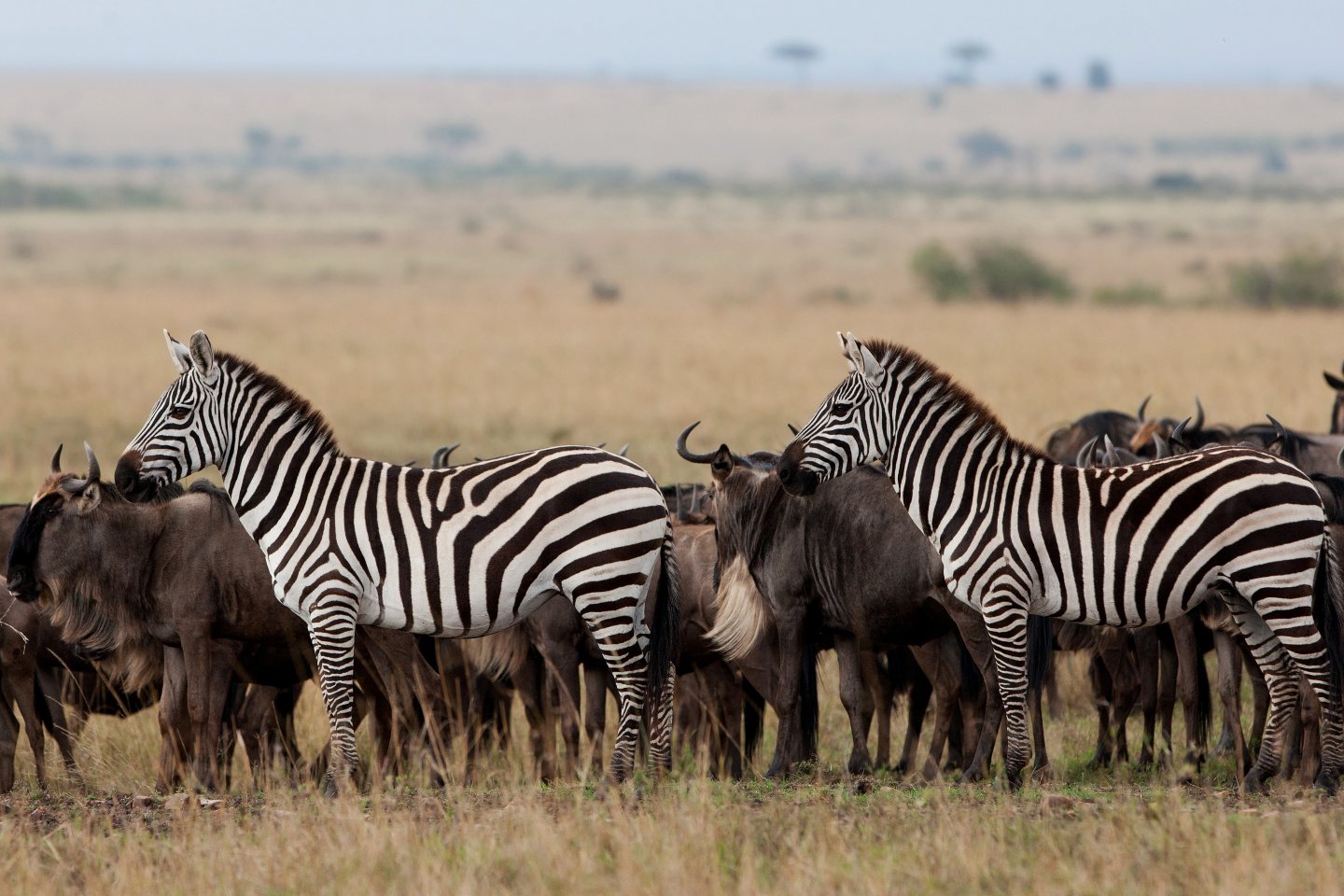
July is the height of the Great Wildebeest Migration and the midway point of the dry season in Kenya. Over 1.5 million wildebeest cross the Mara River during this time and the dryness drives the game to the remaining water sources, making it a great time to view game in all parks, not just Mara.
It is the busiest time of the year for Australian families to book and there’s a reason for that: it is the two-week July break, and it is the most famous wildlife event in Africa. The trade-off is competition, for your booking and for the animals’ attention at each sighting. Popular river crossing points can have an increased number of vehicles, and quality lodges are booked 9–12 months ahead. If July fits your schedule, make your reservations early. Generally, if you book three or four months ahead, you will get your second or third choice of lodge.
September and October School Holidays: The Quieter Migration Window
The Migration doesn’t end when the July crowds move on. River crossings continue into October and this later time of year has slightly less traffic at the crossings and slightly better rates for lodges than the August period (at least in our experience). This is one of the best value windows of the year for Australian families that can shift to the September or October holiday period instead of July: Migration-season quality without Migration-season congestion or pricing. If you’re budget-conscious, you should consider this period for your Kenya safari.
December and January Summer Holidays: The Green Season
It’s the time when many Australians travel by default, as it falls during the extended summer holidays. This is the green season in Kenya, and there are some positive aspects of it that are underutilized. The bush is no longer dry and brown, newborn animals are everywhere, the lodges are no longer as costly as in high season and it is lush and pretty.
Especially in Amboseli. Predators are more common during calving season and the green backdrop, baby animals and Kilimanjaro make for some of the best photography conditions of the year. Parks are also quieter, as this isn’t a busy time of year like July, so there are fewer vehicles around each sighting.
Only rain is something to plan for. It is not continuous and does not halt game drives, but afternoon showers are common and some lower lying roads may be muddy. Pack appropriately and have some flexibility in your itinerary.
April School Holidays: The Shoulder Season
If you’re looking for a month that’s not as popular with first-time visitors, but is still budget-friendly, then April is the month you’re looking for. It’s the quietest and cheapest time of year to visit Kenya, and there are definitely fewer vehicles in all the parks. Game viewing doesn’t stop, as people believe, the animals are still there, they’re just yours.
April’s rainy weather also brings dramatic, stormy skies, which are different from the clear-sky months. They’re not as postcard pretty and they’re a bit moodier, but if that’s your style, they’re still pretty cool. April is certainly a good month to consider if you’re looking to avoid the busy season or you’re on a budget.
What About Outside School Holidays?
If you are travelling without kids, you are not limited to these four windows and it is worth noting that Kenya’s primary dry season is from approximately June to October, and there is a shorter dry season in January and February. Dry season game viewing without the peak season prices or the pressure of lodging availability is available by travelling in a shoulder month, either late May or early June (before the July rush) or February (after the January crowds have thinned out).
A Quick Comparison
July is the peak migration period, the best time for game viewing, and the highest prices. Book 9-12 months in advance.
September – October: Late Migration, less crowding than July, better rates.
December – January: Green season, newborn wildlife, lower prices, some rain.
April: The least expensive month, less people, more dramatic skies, and more rain.
How This Should Inform Your Booking
If the river crossings are a must for you, you should be in the Mara from July to early October, and July offers the best odds. Make reservations as far in advance as possible.
September–October and April are both great times for wildlife viewing and are less busy and less expensive than the peak season, a view Magical Kenya, the national tourism board, also reflects in its own seasonal travel content. December–January falls in the middle: not as inexpensive as April, not as busy as July, and with the added benefit of newborn animals and greener scenery. Regardless of the window you choose, our safari days in Kenya guide can help you correlate the safari days to the season.
Regardless of the window you select, you may want to book your flights concurrently with your lodge. It’s not just the safari itself that books out early, peak-season flights from Australia (particularly around July) also tend to sell out and become more expensive the closer you get to your departure date. Our Kenya safari cost guide will let you know how much seasonality really affects the overall price.
If you tell us when you’re going, we can tell you right away if you can expect good conditions or if you should try to move your trip a few weeks earlier or later to find better rates or quieter parks.
A Word on Booking Flights Around These Windows
As a busy travel period nears, flights are more restricted than most people think, and there are no direct flights from Australia. When airlines are planning capacity and pricing, they are considering demand from several markets and a seat that is available five months ago for July travel can suddenly vanish or double in price in a matter of weeks if an airline is flying through Dubai, Doha, Singapore or Addis Ababa. This is not as much of an issue in April and to a lesser extent in December-January when demand is more evenly distributed.
Don’t Ignore Shoulder Weeks!
Often the days just before or after a peak travel period can offer substantial savings on flights and lodges, and still be a great time to see the wildlife with little compromise. For example, travelling in the last week of June instead of the first week of July may result in lower rates and fewer other visitors, and the parks themselves are not that different from week to week. It’s a small adjustment that can be easily missed when you’re stuck with fixed school dates, but if you have a few days either side to play with, it’s worth talking to us about, and our 8-Day Luxury route is a good example of an itinerary built with that kind of flexibility in mind.
Last updated: July 10, 2026
Facebook
Twitter
LinkedIn
Email

Tracey Pelham
Tracey is a Senior Safari Consultant at Majestic Kenya Safaris. She holds a degree in Travel and Tourism Management from the University of Nairobi and has spent more than a decade planning safaris, including several years at Ardan Safaris, where she worked in safari offices and at ground level in bush camps. Her insights have appeared in several travel magazines and she has authored two guides on sustainable tourism practices. She writes on safari costs, trip planning, conservation, sustainable tourism, and wildlife. She is also an avid safari enthusiast, Masai Mara being her favorite safari destination.
From Our Blog
July 16, 2026

July 16, 2026
Save up to 20%
We currently have an offer where you can save up to 20% if you book today.
Save 20%