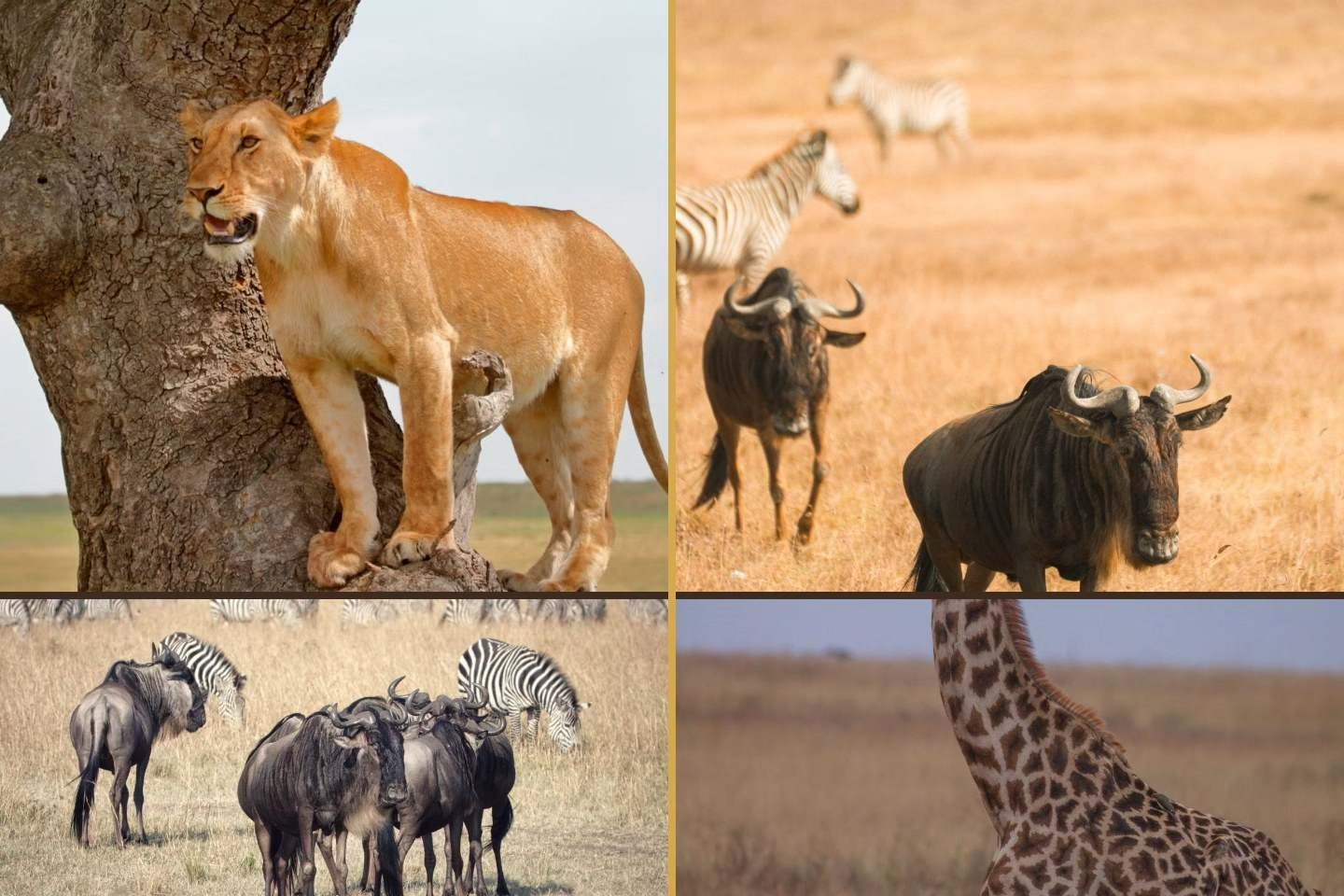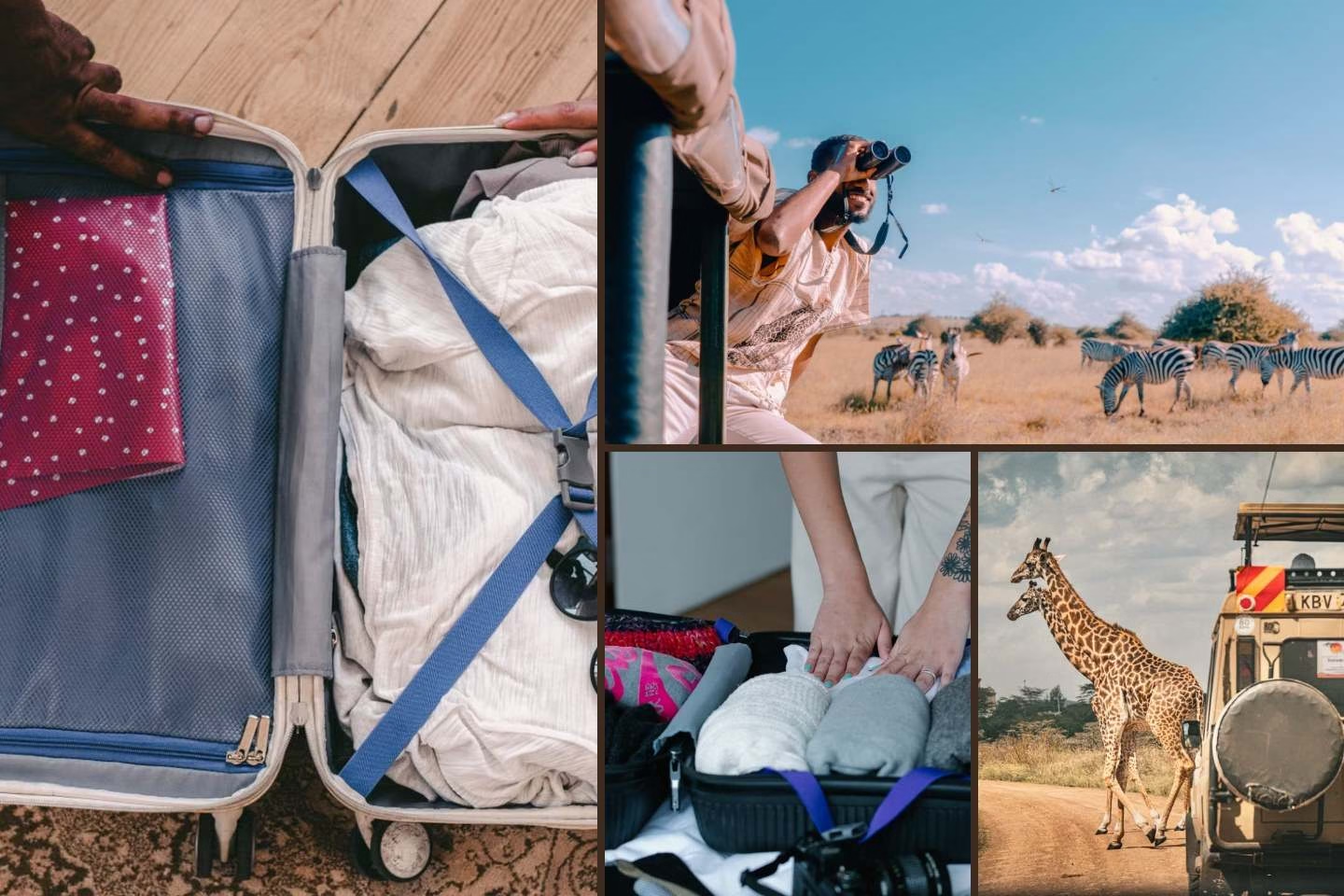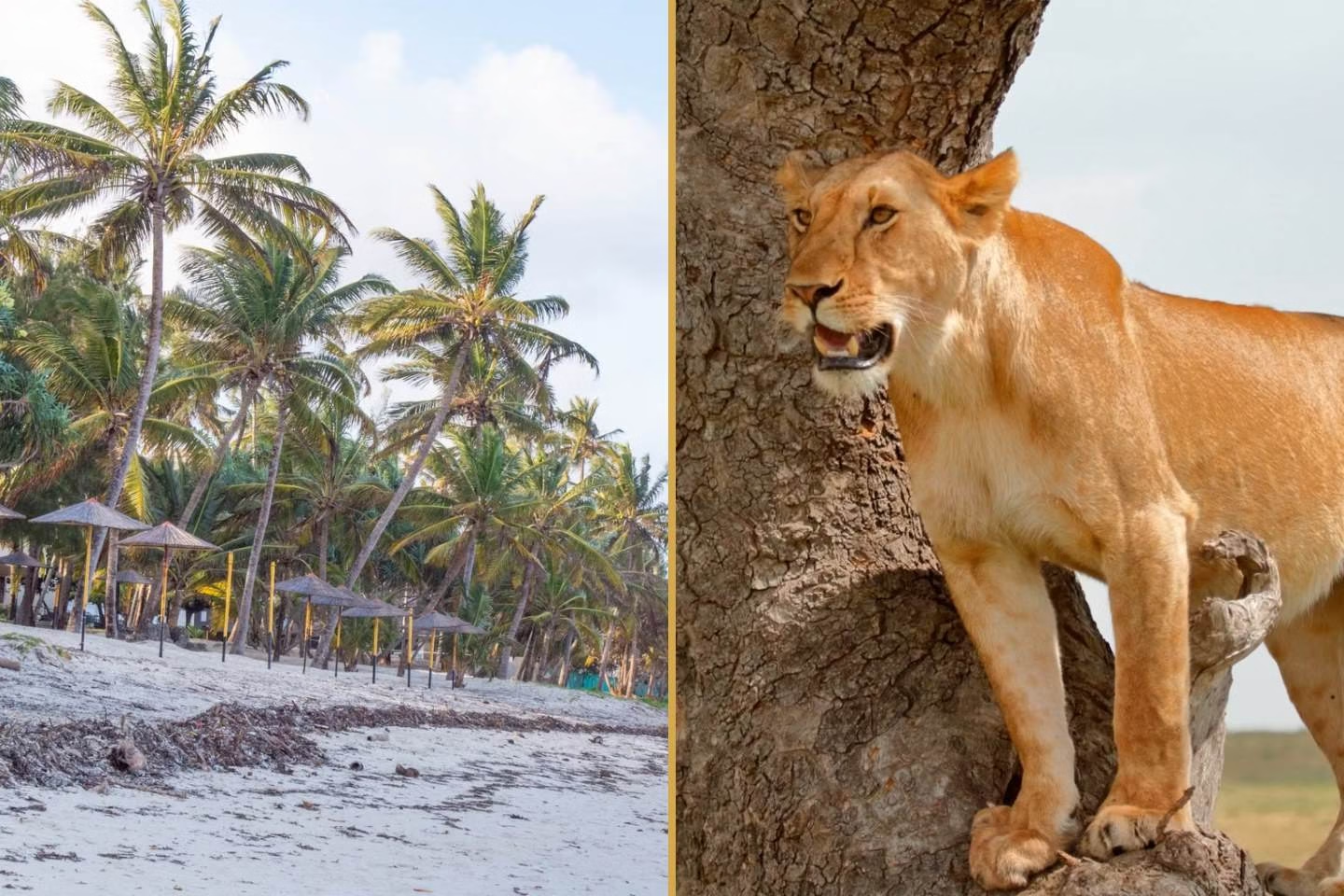

Looking to travel from Australia to Kenya? From a safari in the Maasai Mara, to the vibrant streets of Nairobi, to the white sand beaches of Diani, your trip begins with one crucial step: getting your entry documents in order. Fortunately, Kenya has made this process much easier in recent years. The bad news? Some traps remain that can surprise the unwary traveller.
From the new Electronic Travel Authorization system to passport requirements, supporting documents, and some lesser-known tips that can save you time and stress at the airport, this guide has all the information Australian citizens need to know about entering Kenya in 2026. To learn more about the destinations, safari inspiration and travel planning resources, check out some of our Kenya Trips.
The Electronic Travel Authorization (eTA) is a new visa system that was introduced in Kenya in January 2024. This is a huge shift, no embassy visits, no paper applications and no mailing of passports anywhere. All of this is done online via the official Kenyan government portal, etakenya.go.ke.
The eTA is a requirement for Australian citizens travelling for tourism, business or transit purposes. The system was intended to make immigration easier for Kenya and enable the government to filter visitors before they arrive. It translates to sitting on your couch in Sydney, Melbourne or Perth and getting your approval via email within a few days.
The eTA fee is USD $30, or approximately AUD $43 to $45 (depending on the exchange rate at the time of application). This is in addition to a small bank processing fee that some card issuers apply. The fee is the same for all ages, children and infants must also have their own eTA and pay the full fee. If you’re travelling with children, this is something that many families don’t consider, so make sure to include it in your budget.
The processing time is usually 3 working days, but we’d suggest applying at least 2 weeks before you leave to allow for any unforeseen delays. During the peak safari season (July to October), volumes may be higher, so it is always best to apply early.
The application process is simple, but it’s important to pay attention to the details. This is what you need to do:
Go to the official eTA Kenya website and register an account. Beware of unofficial sites that ask for higher prices or can’t offer valid authorisations, the official site is the only one that counts.
Enter your personal information as it is written on your Australian passport. Any minor differences between your application and passport (e.g. middle name) can cause delays or rejection.
Submit a clear scan of the biographical page of your passport and a recent passport-size photo (white background, neutral expression, no glasses).
Write down your travel plans, such as when you plan to travel, where you will be staying, and why you are traveling.
Pay fee with credit/debit card. Your application is submitted for review upon confirmation of payment.
Please wait for the approval email. Once it does, download and print a copy to keep with you and save a copy to your phone.
A very important caution: Application fee is not refundable even if eTA is not granted. This is particularly crucial to verify all the details before submitting. Some of the most frequent errors are incorrect passport numbers, unclear document scans, and mismatching accommodation information.
There are two important requirements for your Australian passport to enter Kenya. First, it must be valid for at least six months from the date you plan to enter. Second, the official minimum is one blank page, but it’s better to have two, as some airline check-in staff and immigration officials like to have space for entry and exit stamps.
These requirements are strictly enforced and airlines can and do refuse to board passengers whose passports do not meet these requirements. Before you begin the eTA application, renew your passport if it is nearing its expiration date or if it has few blank pages. The Australian Passport Office usually processes passport renewals in about 6 weeks, but you can opt for priority processing if you need it.
If you are a dual citizen, it’s important to also know the rules of dual citizenship. On the Kenyan side, dual citizenship is legally straightforward, as Kenya has recognised dual citizenship since the coming into force of the Constitution of Kenya in 2010, and this is formalised in the Kenya Citizenship and Immigration Act 2011. The important thing to know is that governments can only provide consular assistance to their citizens in a country where they are also citizens, and if you are a dual citizen, it’s best to know what that means for you before you travel.
In addition to your passport and approved eTA, you will need to have some supporting documents on hand when you arrive in Kenya:
Proof of accommodation: Hotel booking confirmation or letter of invitation from friends/family. Immigration officers may request to view this.
Onward or return travel: Evidence of your return flight to Australia or onward travel to another country. A printed or electronic copy of your booking confirmation is acceptable.
Proof of sufficient funds: This is not always required, but officers may require proof that you have enough money to support yourself while you are here. A recent bank statement or credit card is usually sufficient.
Yellow fever vaccination certificate: If you are travelling through a yellow fever endemic country for more than 12 hours (e.g. Ethiopia via Addis Ababa, a very common route from Australia), you will need to show your International Certificate of Vaccination or Prophylaxis (also known as ‘yellow card’). This is detailed in our Kenya vaccinations, malaria and travel insurance guide.
Travel insurance documentation: Although not a legal entry requirement, it is highly recommended to have comprehensive travel insurance documentation.
Many travellers overlook the difference between eTA validity and the length of stay. Your eTA will be approved for travel within 90 days of the date of issuance, so you will need to enter Kenya within this period. The actual length of stay is however at the discretion of the immigration officer at the port of entry and is usually 90 days for tourism, which is more than most safaris require. If you’re still figuring out how many days would be best for your trip, that’s something you should figure out before you book your eTA dates.
The basic eTA is valid for one entry. Once you leave Kenya, you’ll generally need a new eTA to re-enter. There is, however, one important exception: if you travel directly from Kenya to Burundi, the Democratic Republic of Congo, Rwanda, South Sudan, Tanzania or Uganda and return to Kenya without stopping in any other country in between, your original eTA will be valid for re-entry as long as it has not expired.
It is a serious matter if you overstay your allowed time. Fines, detention and even future ban on entry to Kenya may be imposed. Always be aware of your stay dates and make plans to leave.
The East Africa Tourist Visa is a good option if you are planning to visit countries other than Kenya, such as Uganda and Rwanda. This is a multiple entry visa which enables the holder to move freely between Kenya, Uganda and Rwanda for a period of 90 days. It is a great choice for those who want to travel to East Africa as a whole, such as a safari in the Maasai Mara in Kenya and gorilla trekking in Uganda or Rwanda.
East Africa Tourist Visa can be applied for in any of the three countries. You do not need a Kenyan eTA if you already have one issued by Uganda or Rwanda and are travelling between the three countries without visiting any other countries.
When you land at Jomo Kenyatta International Airport in Nairobi (or Moi International Airport in Mombasa), you’ll proceed through immigration control. Bring your printed eTA approval, your passport and supporting documents with you. The procedure is fairly quick, but it can be quite a wait during busy arrival times.
Always carry your alien identity card, otherwise you may be fined or detained if you are a foreigner in Kenya. Your passport with the entry stamp is the main document of identification for tourists during their stay. With the documents sorted, our packing list for Australians has all the rest of the essentials you’ll need.
Many first time visitors to Kenya do not know this: for KWS-managed parks like Amboseli, Lake Nakuru and Nairobi National Park, you have to pay park entry fees via the eCitizen platform. This is a different system to the eTA. The Masai Mara National Reserve is the exception, it’s managed by Narok County rather than KWS, so its fees are handled through the county and conservancy system instead of eCitizen. Pre-paying and setting up an account before you arrive at the park gate can save a lot of time and frustration of waiting in the heat. The fees are dependent on the park and on whether you are a resident or not, please consult the Kenya Wildlife Service website for the current non-resident fees. In most cases, however, this shouldn’t be a problem as your tour operator will handle the payments. The park entry and conservancy fees are included in the price of your safari.
Quick Reference: Entry Requirements at a Glance
eTA fee: USD $30 (~AUD $43 – $45), non-refundable
Processing time: ~3 working days (apply at least 2 weeks early)
eTA validity: 90 days from issuance | Stay: up to 90 days (tourism)
Passport: Must be valid for at least 6 months with at least 1 blank page (2 are preferred)
Official portal: etakenya.go.ke
East Africa Tourist Visa: valid for Kenya, Uganda and Rwanda (90 days, multiple entry)
National parks: pay via ecitizen.go.ke (Masai Mara fees are handled separately through Narok County)
Last updated: July 2026

Tracey is a Senior Safari Consultant at Majestic Kenya Safaris. She holds a degree in Travel and Tourism Management from the University of Nairobi and has spent more than a decade planning safaris, including several years at Ardan Safaris, where she worked in safari offices and at ground level in bush camps. Her insights have appeared in several travel magazines and she has authored two guides on sustainable tourism practices. She writes on safari costs, trip planning, conservation, sustainable tourism, and wildlife. She is also an avid safari enthusiast, Masai Mara being her favorite safari destination.